Grand Theft Capital
The Political Economy of Grand Theft Auto 6
Elliot Dolan-Evans
When I was ten years old, one of my favourite computer games was Grand Theft Auto (GTA 1), the original title in Rockstar’s open-world, action-adventure, crime-heist spectacular Grand Theft Auto series. In the game, which was a top-down pixilated adventure playable on Windows 95, you were awarded for causing sheer mayhem – there was very little by way of a plot. I remember my character just standing in the middle of a busy intersection, equipping a rocket launcher, and slowly spinning round and round while regularly releasing highly-explosive ordinances in random directions; or they might purposely punch someone in the street, wait for the ambulance, jack the ambulance, and then drive to a highly secure (though metro-located) military complex and steal a tank to cause chaos across the city; or, and, a particular favourite of my seven-year-old sister who would often watch me, my character could run down what was presumably a jogging group (I later found out they were supposed to represent a line-up of monks… the pixels allowed no specific detail in my defence), with the game awarding a huge point bonus and ‘Gouranga!’ plastered across the screen.
Obviously, GTA 1 was a violent game that was probably not entirely appropriate for pre-pubescents. In my mum’s defence, she only allowed us to play one hour of any computer game at a time, and I think the graphics were so poor that it was quite hard to make out what was happening. Since then, I have barely played any Grand Theft Auto title, but I have been eagerly tuned into the current cultural zeitgeist around Rockstar’s latest foray: Grand Theft Auto VI (GTA VI). What has particularly interested me, however, has been the political economy of the release; not only what it tells us broadly about the entertainment industry as a whole, but the political economies within the fictional game itself.
‘To new beginnings’: GTA VI as Global Event
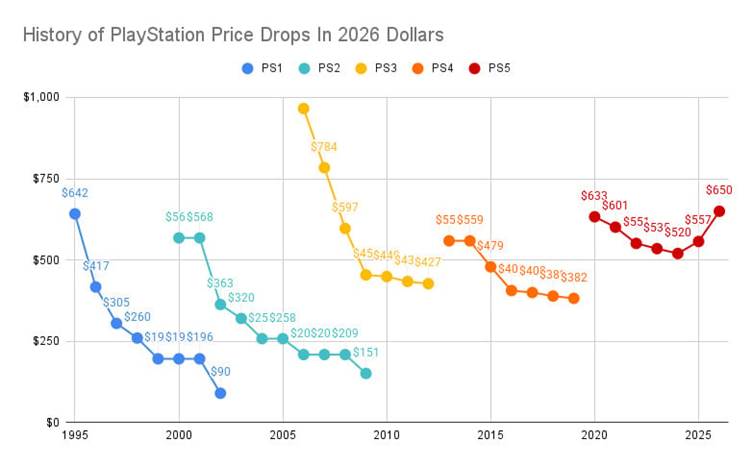
GTA VI, within a few days of its release, has become a cultural phenomenon. In just 24 hours, the game has earnt $3.79 billion for Rockstar and its parent company Take-Two Interactive (whose stock rose 0.7% to close at 210 by Friday), the largest entertainment launch in history. Rockstar had sold 32.5 million pre-orders across Xbox Series X/S and Playstation 5 platforms, a record across these consoles, with the standard game going for the hefty price tag of A$129.95. It is expected to become the most commercially successful entertainment product of all time, which is a record currently held by its 2013 predecessor GTA V. Because Rockstar chose to release GTA VI exclusively on the two aforementioned consoles, with a PC release expected in early 2027, they have had their prices significantly inflated. The Playstation 5 Pro, which offers the best GTA VI gaming experience, is sold out of most retailers, with eBay resellers listing it between US$899 and US$1,500. This console started at around US$633 at release, and, unprecedentedly, has increased in price – due to its pandemic release date, supply chain disruptions, tariff wars, and global RAM crunches, tying the Playstation and GTA VI firmly into the world’s tumultuous global political economy.
(Graph from Kotaku)
GTA VI has, evidently, already been a money-making machine for Rockstar, as well as Sony and Microsoft, who produce the Playstation and Xbox, respectively. Not everyone in the game industry has benefitted, however. Because of the profit potential of mega-releases such as GTA VI, the entire industry has become extremely concentrated (despite approximately 700 games being released yearly on Steam, the world’s largest distributor). As Chad Habel at Adelaide University notes, this has resulted in mass studio closures and worker layoffs as game companies try to maximise returns. Even just this year, over 13,000 workers have been sacked, 155% more people than in 2025. Rockstar itself has recently fired workers, and, potentially even more egregiously, in alleged attempts at union busting, with its workers currently in a process of voting to recognise their branch of the Independent Workers Union of Great Britain. Further, because Rockstar opted for a digital release, retail stores have failed to benefit from the GTA VI boom. This has also meant that gamers can’t own the actual game itself, like on a CD, exchange it with friends etc., and this trend has helped crash the pre-owned game CD sales market.
‘Vice City, Baby!’ – Feminist Political Economy of GTA VI
GTA VI primarily follows co-protagonists Jason and Lucia as they make another attempt at repairing their relationship, while struggling to make ends meet in the crime-prone Vice City and surrounding locales. Now, is the game good? Unequivocally, yes. The Playstation 5 version currently enjoys a Metascore of 99 based on over 150 critical reviews, an all-time record that is only comparable to The Legend of Zelda: Ocarina of Time from 1998 (which had far less reviews). Like any Grand Theft Auto title, there have already been a generous number of articles warning concerned parents about the explicit content, with moralising reactions no doubt close by in a cultural milieu of quick, out-of-context snippets fuelling rage and anger. However, it is a brilliant, almost heartfelt story of love, tenderness, and intimacy between the two main characters, on a backdrop of violent crime, gangsters and gangbangers, and mob syndicates dominating the titular city. The graphics and aesthetics of the game are phenomenal, with realistic physics, ray tracing for reflections, and inordinate details – you can see every strand of hair of non-playable characters. This is yet another example of how wrong famous film critic Roger Ebert was when he said that computer games ‘are not art’; though it seems different levels of the Australian government agree with Ebert, through criminally under-funding the sector.
Outside of the above IRL (in real life) political economy machinations surrounding the release of GTA VI, what about the political economies inside the game itself?
One of the interesting peculiarities about the release of GTA VI, though perhaps not that surprising in retrospect, is the ‘Wails of Woke’ from right-wing reactionary figures, which has a firm basis in political economy. The central motor of the game is the bond between the two main characters, Jason and Lucia. Jason is the classic ‘strong but silent’ type, an ex-military, muscular, and sincere man who gets dragged into a life of crime, and Lucia is a complex and nuanced woman who has boosted cars since she was 14, who doesn’t get into the pitfalls of the superficial liberal ‘girl boss’ feminism that most strong female characters get typecasted as. Jason and Lucia are fundamentally two people who are trying to ‘make it’ in a world totally stacked against them, with every other non-player character in the game also chasing money through stupid schemes, hustling, or pure crime. Just like Lucia and Jason, we are also in the same desperate struggles to survive in the context of economic collapse and overwhelming, profiteering imperatives that shape our world. Although there is a mindboggling range of activities, jobs, and things to do in the game, the player is explicitly rewarded for small acts of kindness and empathy – such as not littering, sending your partner a selfie, or helping a neighbour. Early in the game, when the player is predominantly Jason, he can improve the relationship with Lucia by cleaning the house, renovating, gifting her flowers, getting groceries, spending time together, and checking on how Lucia is feeling. You even have the option to hold hands as you walk up to violently rob a bank, an indicator of any strong relationship.
For the feminist political economists reading this, these daily, everyday activities are all clearly recognised ‘social reproduction labour’; work that is predominantly completed by women. This is in distinction to what is commonly termed ‘productive’ labour – what we might be familiar with as ‘earning a wage’ – a typical focus for mainstream economists and typically the main goal for protagonists in video games (whether illegally acquired or otherwise). It is this aspect that has unleashed an infantile reaction from luminaries in the online, reactionary quarter. These right-wingers have been outraged at this ‘Good Boyfriend Simulator’, lamenting Rockstar’s ‘betrayal’ of the supposed masculine identity of Grand Theft Auto. It is important to note that GTA VI is not a feminist artefact. Although Jason can be played in a caring and tender way (outside of the violent crime), most men are portrayed as being ‘bosses’ or ‘gangsters’, and the women are usually depicted as strippers, arm candy, or in a child-rearing role (though there are plenty of exceptions). There is, of course, heaps of leud misogynistic commentary, phallic obsessions, and sexism throughout, but now Lucia critically reacts to it and there is significant agency for the cast of female characters (more than previous Grand Theft Auto titles). It seems to have had a positive reception from women gamers, with women accounting for approximately four in ten GTA VI players (up from one in eight for GTA V).
But it is the social reproductive labour in GTA VI that is causing a real stir in the fragile manosphere. In Australia, women do far more of the care, reproductive labour that is crucial for not only so-called ‘productive’ activity to occur, but for the continued renewal of daily life itself. The bemusing reaction from some men in having a modicum of (virtual!) domestic responsibility is a reflection of the broader and central problems that lie at the heart of gender inequality – that women’s social reproduction labour is not valued, and many men refuse to take on the fair share of this work, which can be complex, difficult, and exhausting on a daily basis. There are many other aspects by which Rockstar have firmly jumped into the increasingly absurd culture wars, which are both amusing and a horrifying reflection of our historical moment.
Computer games have been so far neglected by the political economy literature, and I posit that they must be seen as a valuable area of analysis; least of all because they present a funhouse mirror reflection of the capitalist dynamics that operate in all our lives. There is much more one could tease out of a political economy analysis of GTA VI, which I don’t have the space to do here… and I need to actually play it first.
Elliot Dolan-Evans is a sessional lecturer in law at Monash University. His research interests include global governance, Hegelian philosophy, and questions of war and peace. His first book, Making War Safe for Capitalism, was published in 2025 with Bristol University Press.


