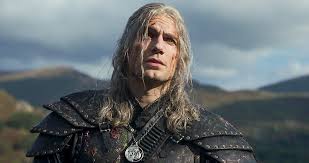
The essay below originally appears as Chapter 6 of The Witcher and Philosophy, edited by Matthew Brake and Kevin S. Decker.
Compatibilism and the Law of Surprise:
Myth, Free Will, Destiny, and Hedgehogs
Shane J. Ralston
“The Law of Surprise is a law as old as humanity itself. The law dictates that a man saved by another is expected to offer his savior a boon whose nature is unknown to one or both parties. In most cases, the boon takes the form of the saved man’s firstborn child, conceived or born without the father’s knowledge.”[1]
One of the most bewildering concepts in the Witcher television series is the so-called “Law of Surprise”—a concept with philosophical implications as massive as Geralt’s biceps! For new fans of the Witcher TV show, episode flashbacks and flashforwards combine with the Law to make for a steep learning curve. The Law of Surprise befuddles viewers at several points in the series, especially during the betrothal banquet scene. It begs for a helpful explanation. This chapter offers that, plus a novel account of the Law tied to “compatibilism,” an alternative position in the debate about free will and determinism.
Determinism is the position that anything that occurs at any given moment in time necessarily occurs the way it does because of what occurred the moment before. If determinism is true, then given the laws of physics and causation, we should be able to predict all future events. Libertarianism is the exact opposite: humans possess free will and so can choose to do something differently than what they did, so not all events are determined in advance.[2] Compatibilism is the view that libertarianism and determinism are could both be true, so despite the fact that most events have been determined in advance, humans can choose to act, to freely will outcomes or even to behave unpredictably.
The Law of Surprise is based on a Polish and Slavic myth stating that a great deed—for example, saving someone’s life or doing the devil’s work—must be repaid with a future windfall, something the indebted person doesn’t yet even have (or even know that he will have)—for example, a child. The windfall is literally called the “Child of Surprise.” In the Witcher world, the character Ciri is the Child of Surprise. Given the intervention of destiny—a close relative of determinism—morality, which presumes free will and autonomy, might play little or no part in whether the Child of Surprise or windfall is acceptable to either the beneficiary or the Child. Failing to welcome the windfall, as Geralt discovers, forecloses future possibilities for free choice, binding Geralt’s destiny with even greater certainty to Ciri, his Child of Surprise. If he had instead dutifully adopted her, he might have had greater opportunities for exercising free will. Here, the Law of Surprise suggests a novel form of compatibilism, which, in the fictional world of the Witcher, could be used to help explain why the Law of Surprise dictates specific outcomes (or shared destinies), but permits some degree of latitude or free choice by the characters in how these outcomes (or shared destinies) come about!
The Plot Thickens
In “Of Banquets, Bastards and Burials” (season 1, episode 4), Geralt is recruited by the bard Jaskier to attend a banquet, a betrothal feast for Princess Pavetta, daughter of Queen Calanthe. A knight by the name of Lord Urcheon upsets the joyous festivities to claim Pavetta’s hand based on the Law of Surprise. With his face hidden under a helmet and body covered with armor, it’s difficult to see Lord Urcheon’s true form. Eist knocks the helmet from the Lord’s shoulders—to reveal that he’s a hedgehog! Queen Calanthe orders Geralt to attack Lord Urcheon, but he refuses, realizing that Urcheon isn’t a monster, but a man cursed. With Geralt’s help, Lord Urcheon disarms the guards. He explains again to Queen Calanthe that Pavetta is his future wife in virtue of the Law of Surprise. After a larger fight breaks out, Queen Calanthe commands the fighting to cease.
But the drama isn’t over yet:
Duny [Lord Urcheon] hugged Pavetta and explained he was cursed as a young boy. He lived his whole life in misery until the day he saved Queen Calanthe’s husband, King Roegner, from certain death. By tradition, he chose the Law of Surprise as payment. Eist pushed Queen Calanthe to honor the tradition, driven by the belief destiny had determined the surprise be Pavetta and, should she resist, chaos would surely ensue. Duny abandoned all hope of claiming the Law of Surprise when he heard the king returned to find a child on the way. He knew no woman could accept him as he is. So, he waited until the twelfth bell when the curse broke. He never intended to meet Pavetta. Only watch from afar. But destiny intervened and they fell in love. Queen Calanthe seemed to accept destiny, handing over her sword and extending her hand to Duny. She pulled him close, whispered “here is your destiny,” and then pulled out a knife and aimed it at his throat. Pavetta screamed out, suddenly awakening her abilities, sending everyone flying across the room.[3]
Queen Calanthe agrees to honor the Law of Surprise. Pavetta and Duny kiss, ending the curse and transforming Duny back into his human form. Duny wants to repay Geralt for saving his life, and while Geralt at first refuses, he agrees to take his repayment according to the Law of Surprise. Pavetta immediately vomits with morning sickness, revealing that she’s pregnant with a child. So, we immediately know that Geralt’s Child of Surprise, his reward for saving Duny, will be Ciri, Pavetta’s daughter.
Geralt initially resists taking his reward. Watching out for Princess Ciri’s safety would be a burden on his adventures slaying monsters and witches and bedding tavern wenches. Eventually, though, he must accept his fate as her protector against the Nilfgaardians and those who see her as the fulfillment of Ithlinne’s Prophecy, a prediction that the world will freeze to death once elven blood is spilled. Questions arise: Does the Law of Surprise dictate that Geralt must follow a rigid path toward claiming his Child of Surprise, or is there some latitude in how Geralt interprets his obligations here? By delaying acceptance of his responsibility for Ciri, does Geralt become less free?
The Free Will-Determinism Debate
Discussions about whether our choices in life are ultimately free or determined have a long history. Questions about the extent to which life decisions are bounded or unbounded, restricted or free, often revolve around two discrete positions: libertarianism and determinism. Libertarians claim that humans have free will because they can always choose to do otherwise. Indeed, judgments about moral and legal responsibility depend on the assumption that people were at liberty to choose another option than the one they did. Otherwise, how could they be said to be accountable for their actions?
Determinists, on the other hand, insist that all events occur within a web of causes and effects ultimately governed by the laws of physics. If we accept this scientific view of matters, and we concede that all prior causes that could condition a human choice are in principle knowable, then we could ideally predict how a person chooses to act, and do so with absolute certainty. Ergo, no human choice is truly made out of free will. The problem with determinism is that it undermines moral and legal judgments that a person is responsible for the consequences of their actions, since it’s impossible for them to ever choose to do otherwise. Our future is already sealed or determined in advance. So, we’re ultimately responsible for nothing we do! And although “destiny” and “fate” aren’t scientific concepts, they can substitute, especially in fantasy stories, for the laws of physics, fixing our future so as to defeat the possibility of freely choosing an alternate path.
Compatibilism is a third rail between support for libertarianism or determinism. It holds that a person’s actions can be both free and determined. There are at least three arguments for compatibilism that are fairly representative of why people might find it attractive. First, in the paradigm case argument, we say that there are some characteristic instances in which we feel that we’re acting freely but yet we know our choices are determined in advance. An example is when you have to choose between chocolate and vanilla ice cream. While you don’t feel forced to choose one over the other, your choice actually reflects prior events and experiences, such as developing a preference for one flavor over the other or a bad past experience with one flavor that makes you detest it.
The second is the epistemic or knowledge-based argument: I know what freedom feels like, even though I can’t be certain that I’m entirely free. While I don’t know all the events that determine my actions—even though in principle I could—I do nevertheless feel that my choices are constrained by both outside and inside forces. External influences (environment, history, laws of nature) and internal predispositions (habits, preferences, mental states) control my choices, but this doesn’t mean I’m deluding myself when I say that I feel free or that I could have chosen otherwise. So, both free will and determinism must be true. In other words, they’re perfectly compatible.
The last is the best possible world argument: nobody would want to live in an indeterministic universe (that is, the opposite of determinism), which would be a chaotic world ungoverned by physical laws. Likewise, no rational being would wish to live in a universe lacking freedom (that is, the opposite of free will), which would be a world populated by slavish creatures, each bound to its already determined future by metaphorical chains and shackles. So, if we want to live in the best of all possible worlds, we ought to embrace compatibilism. Whichever of these three arguments we appeal to, free will and determinism prove to be consistent. So, compatibilism is probably true.
Compatibilism is also roughly equivalent to what Sara Bizarro calls “Polythetic Free Will,” the idea that free will and responsibility aren’t absolutes, but that each exists along a spectrum or continuum of more or less freely-chosen, and greater or lesser responsibility-generating actions. In Bizarro’s words:
One of the aspects of the polythetic view of free will is the point of origin of the action. A free action comes from us, which makes us somewhat responsible. A non-free action does not come from us, which makes us somewhat not responsible. If we are to be mechanisms, we want to be self-winding mechanisms, as opposed to other-winding mechanisms.[4]
Emerging from Bizarro’s polythetic view of free will are a number of fascinating implications for compatibilism: first, free will is voluntary: it “originates in the person, it is not a result of manipulation” like forcing or deceiving someone to choose; free will is responsive to reasons: actions aren’t random but thought out, “choices are considered, and reasons are used to make these choices”; free will relies on knowledge: “information and knowledge regarding the possible consequences of the action” are readily available to the person; free will presumes no defects: the person suffers no difficulties “outside of their awareness and control” such as limitations on their ability to think or perceive; free will presumes the existence of alternatives: there are two or more options, so the person possesses multiple paths from which to choose; and free will is self-constrained: a person can limit themselves and their options, “but if that constraint is irreversible and they want to reverse it, then they may become less free as a result.”[5]
Destiny and Freedom in the Witcher World
In the Witcher world, why does the Law of Surprise dictate the futures of characters like Duny and Geralt? The short answer: nobody wants to screw with destiny, because fate always has the last word. In the case of Duny and Pavetta, it seems perverse that Duny might’ve claimed someone’s daughter as a bride in exchange for a heroic deed. So, the writers maneuver around that shocking implication of the Law by noting that Duny and Pavetta developed feelings for each other months earlier, and the Law of Surprise only cemented those feelings in a future marriage. Duny and Pavetta were free to fall in love, but even if they hadn’t, Pavetta would have eventually been his. According to the Law of Surprise, Pavetta is payback for Duny saving King Roegner’s life. However, this is not a reward that’s chosen: it’s fated that Pavetta shall be Duny’s. She is destined to become his Child of Surprise. Within the narrative, there is latitude for free action, but the outcome is nonetheless determined in advance.
So, how does the Law of Surprise function in Geralt’s case? Why does it bind him to Ciri, the daughter of Pavetta, as her protector but not her betrothed? The Law manifests in different ways and its manifestation to some degree depends on the interpretation given to it by the beneficiary. So, while Duny understands his windfall as being Pavetta’s hand in marriage, Geralt appreciates his as an obligation of another sort: the duty to protect Ciri against the many forces that want her dead. Free will enters the picture in how that interpretation is rendered. Geralt tried to evade responsibility, but fate guides him back to it, until finally he must accept it. The Child of Surprise also has a part to play interpreting how the Law of Surprise will play out. In this way, the Law has a consensual element, depending on the agreement between beneficiary and Child of Surprise about the terms of their future relationship or fated bond.
Besides the banquet scene from season 1, episode 4, two other sequences demonstrate how freedom and fate prove compatible in the world of the Witcher. One is the dragon hunt sequence (“Rare Species,” season 1, episode 6), when Geralt reveals to Yennefer that his third wish to the djinn joined their fates together. (Previously, when Jaskier discovers the djinn’s bottle and releases the evil spirit, it attacks him. In the book, Geralt recalls an old incantation to send the djinn away. In the television show, Geralt wishes for peace and quiet, so that Jaskier loses his voice. His second wish causes the guard to burst. The third and final wish Geralt makes is that he’ll never lose Yennefer.) This news of their intertwined fates angers Yennefer, who quickly reminds Geralt that he is bound to Ciri by the Law of Surprise. Why is she mad? She believes both that he’s robbed her of her freedom and that with two competing fated paths, it’s possible that Geralt will neglect his duty to protect Ciri to be with her. Yennefer chooses to abandon Geralt, believing this will allow him to fulfill his obligation to Ciri. Of course, fate will have a hand in bringing all three together in the near future. Another sequence of scenes occurs only days prior to Nilfgaard invading Cintra. Geralt arrives in Cintra to claim his Child of Surprise, hoping to take Ciri away from the city and protect her from the Nilfgaardian army. However, Geralt’s plan is frustrated by Ciri’s grandmother, Queen Calanthe. She doesn’t want to hand Ciri over, so she tricks him into waiting and then imprisons him. Geralt leaves Cintra, thinking he’s failed in his duty. Ciri later escapes Cintra (“The End’s Beginning,” season 1, episode 1) and then discovers Geralt in a farmhouse recovering from his wounds (“Much More,” season 1, episode 8). As fate would have it, she asks Geralt, “Who is Yennefer?” The Law of Surprise plus the djinn’s third wish tie the three characters’ fates together, but that doesn’t mean that each must follow a rigidly fixed course to a common destination. Indeed, Ciri, Yennefer, and Geralt each make their own path toward their shared destiny.
A Witcher Compatibilist?
Is the Witcher world governed by determinism or does it allow for free will? The Law of Surprise dictates fated outcomes (or shared destinies), but in the process of reaching those destinies, the involved parties can freely choose how to pursue and interpret their paths. Of course, when the beneficiary of the Law tries to evade his destiny, fate intervenes, drawing him back to his Child of Surprise with even greater restrictions on his free choice. Freedom and unfreedom, indeterminism and determinism, chaos and order are simultaneously at work in the Law of Surprise. In other words, compatibilism is the name of the game!
If we return to Bizarro’s polythetic free will, a close cousin of compatibilism, we can say with greater precision how compatibilism operates in the Witcher world. While Geralt can be seen as a “mechanism” determined to protect his Child of Surprise, Ciri, he is what Bizarro calls a “self-winding” rather than an “other-winding” mechanism. A self-winding mechanism has its own motivations, intentions and reasons, and acts accordingly, even though the alternatives it selects are constrained in advance by fate or physics. An other-winding mechanism, on the other hand, is entirely controlled by forces outside of itself, so that it is almost wholly determined, not freely choosing. Geralt voluntarily chose for Duny to compensate him according to the Law of Surprise. Geralt had reasons for making his choice. He knew what the Law of Surprise entailed and that he’d be bound to accept his fate as guardian of his Child of Surprise. Here, we would say that the sliding scale of Geralt’s freedom is high: he suffers from no cognitive defects, other than weaknesses of the will for beautiful women and wine! Plus, Geralt had alternatives: he didn’t have to choose to be repaid via the Law of Surprise. Lastly, and most importantly, Geralt’s choices were self-constrained, since he initially freely rejected an irreversible or fated constraint (i.e., his role as Ciri’s protector), but by resisting it he actually became less free. Only by accepting his fate does Geralt truly embrace his freedom to act within fated constraints. This sounds utterly self-contradictory, but that’s the beauty of compatibilism!
As the ancient Greeks professed, when a sacred prophecy is decreed, there’s no sense fighting the gods’ will! Think of the example of Oedipus: he did everything in his power to thwart his destiny, as foretold by the Oracle at Delphi, to kill his father and marry his mother, and yet everything the Oracle predicted came true! Know thyself! here means submit to fate and accept the path chosen for you. Within the parameters of a predetermined future, the traveler can at least choose to make the path their own, a path punctuated by surprise and wonder, yet a path nevertheless constrained by fate. That’s compatibilism. And that’s the path of the Witcher!

[1] Fandom Games Community, “The Law of Surprise,” Witcher Wiki, October 9, 2016, at https://witcher.fandom.com/wiki/Law_of_Surprise
[2] Libertarianism in the free will debate means something different than political libertarianism. Political libertarianism is the idea that government should have minimum influence over people’s lives, other than to protect private property. Consequently, personal liberty is maximized. Free will libertarianism states that humans do in fact have free choice, while political libertarianism prescribes less government as a way to expand opportunities for humans to exercise free choice.
[3] Fandom Games Community, “Duny,” Witcher Wiki, at https://witcher.fandom.com/wiki/Duny_(Netflix_series)
[4] Sara Bizarro, “Free Will and A Clockwork Orange: A Polythetic View of Free Will,” Ethical Perspectives 29 (2022), 191.
[5] Sara Bizarro, “Free Will and A Clockwork Orange,” 192.


 The Blackwell Philosophy and Pop Culture Series